Fun Learning Activities
A Book Filled With Fun Learning and Activities for Children!
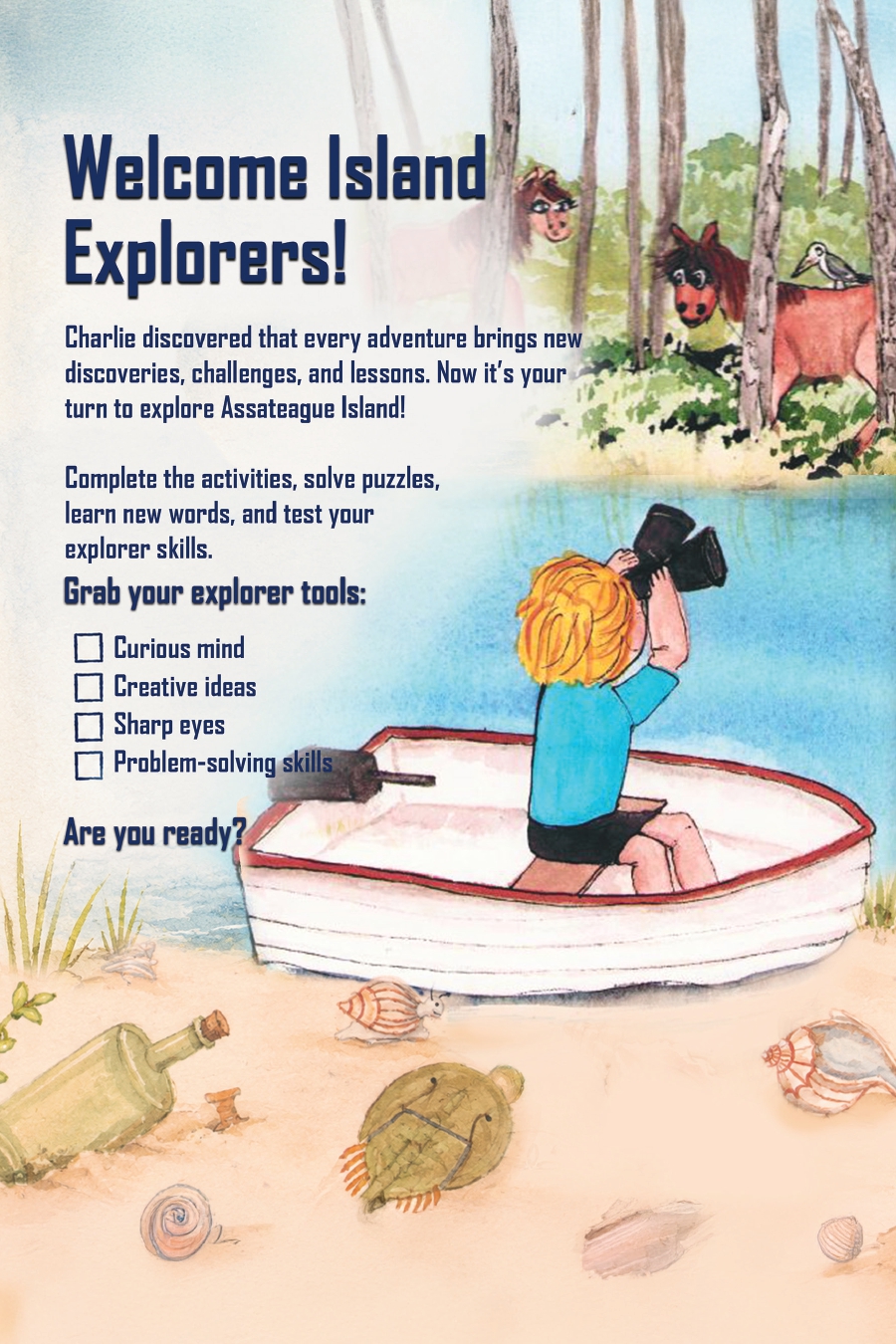
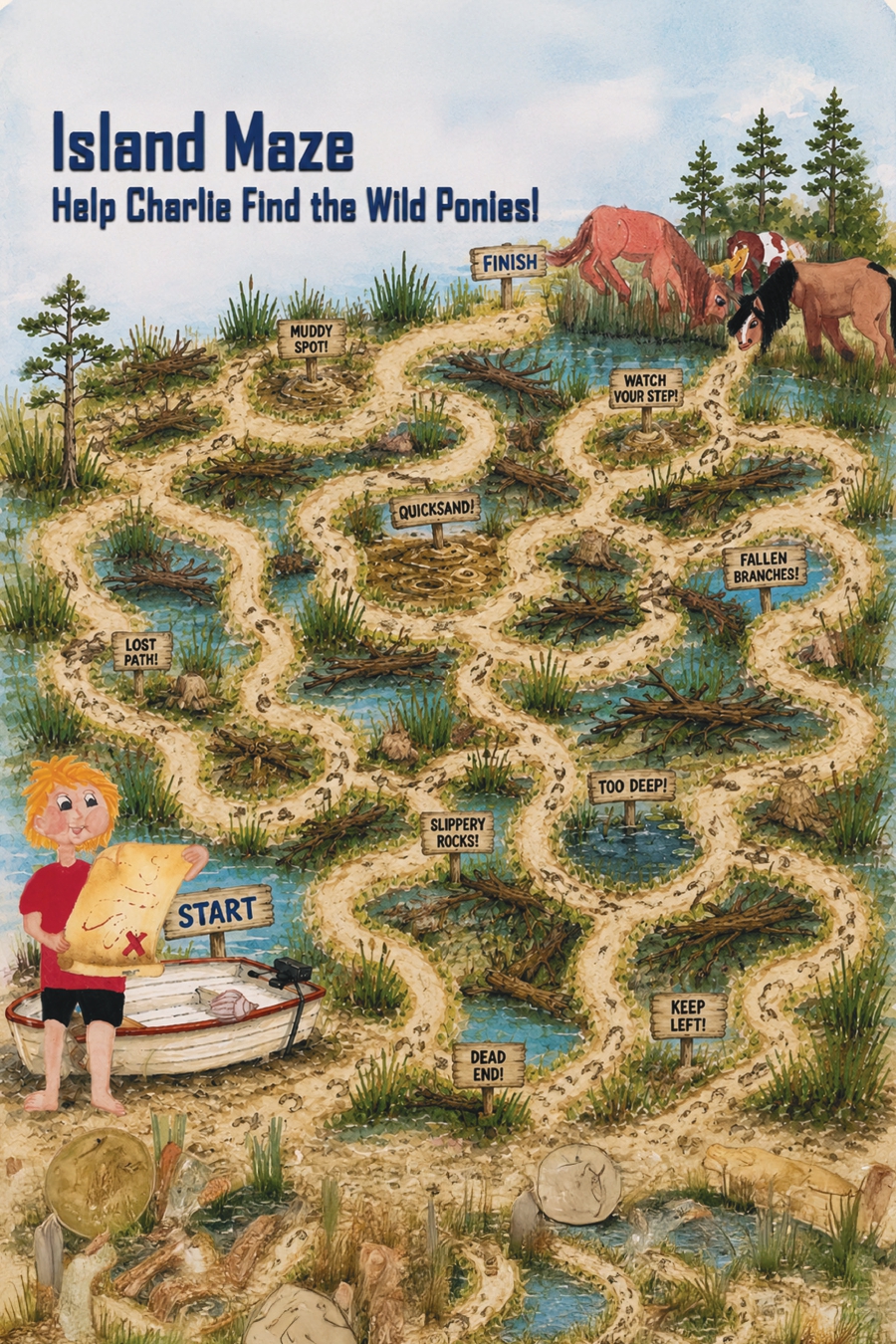
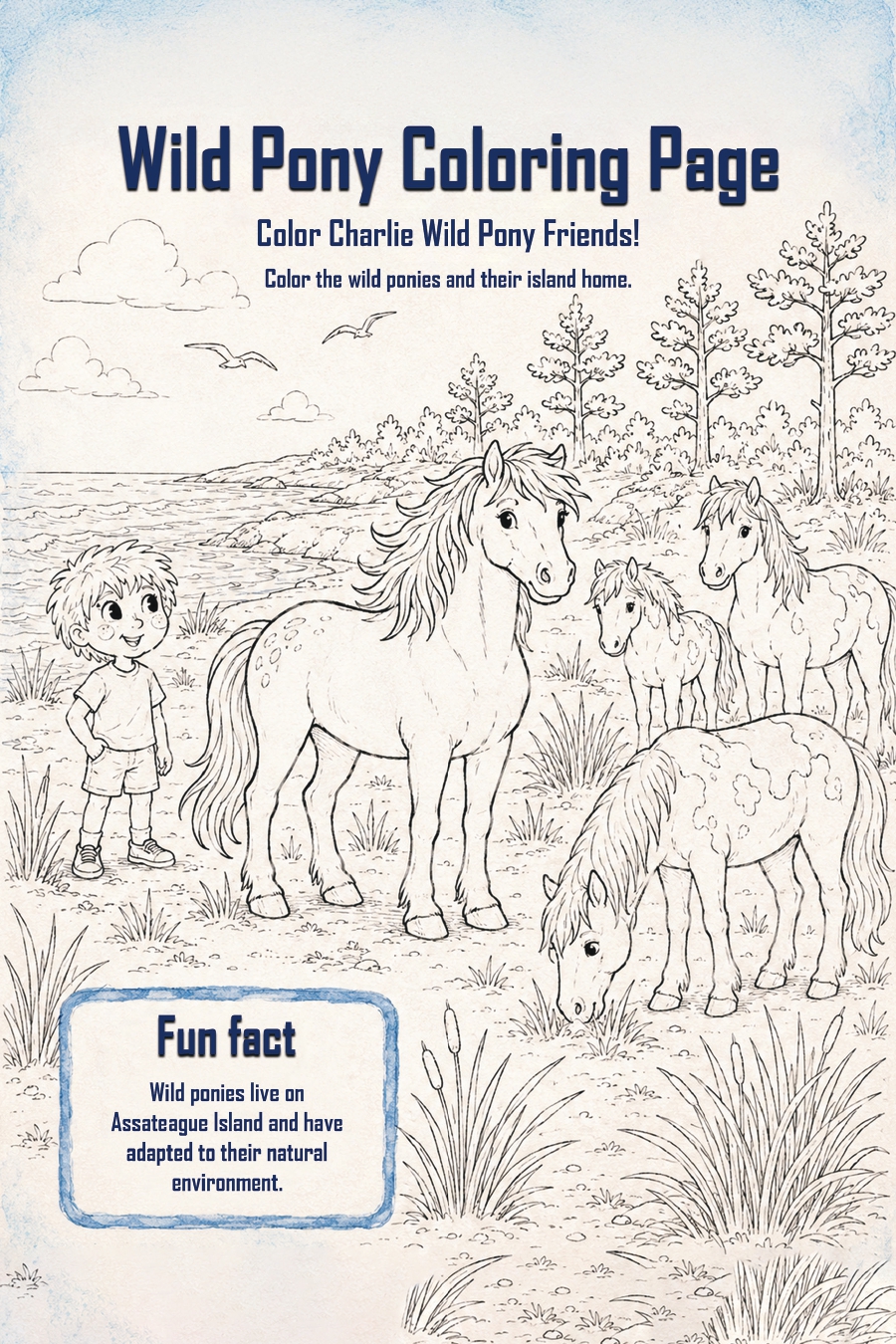
Discovering Treasure on Assateague Island is more than a story. It is a playful learning journey where children travel with Charlie across Assateague Island, follow a mysterious treasure map, and discover wild ponies, dolphins, marshes, and hidden lessons along the way. Every page encourages imagination, curiosity, and a deeper love for nature while turning reading into an interactive experience. Parents and teachers can use the story’s moments to make learning fun, meaningful, and memorable.
📖 Start Exploring
Fun Things Parents Can Do With Children at Home
At home, this book becomes a shared adventure where families can step into Charlie’s journey together. Parents can read aloud the moment Charlie finds the old bottle with the treasure map and ask children what they think might happen next. They can talk about the wild ponies on Assateague Island, the playful dolphins in the water, and the peaceful marshes Charlie explores. Families can recreate the story by drawing the island scenes, imagining the stallions fighting for dominance, or making a pretend treasure hunt inspired by the map in the story. Children can also be encouraged to think about Charlie getting lost and how he uses observation to find his way back, helping them learn awareness and problem-solving in a fun and natural way. These activities turn reading into a living experience filled with imagination and connection.
Classroom Adventures That Make Learning Exciting
In classrooms, this story becomes a powerful tool for creative learning and discussion. Teachers can guide students through Charlie’s journey across Toms Cove, the wildlife refuge, and the marshlands of Assateague Island, helping them understand real geography, wildlife, and nature. Children can discuss the dolphins swimming beside Charlie’s boat, the wild Chincoteague ponies grazing in the fields, and the bird-filled pond that becomes part of his journey. Teachers can use the moment when Charlie loses his way and forgets his compass to talk about observation skills, nature clues, and problem-solving. Students can also explore the idea of the treasure map and what “real treasure” means in their own lives, just like Charlie discovers at the end of his adventure. This makes learning feel alive, emotional, and deeply connected to storytelling.